

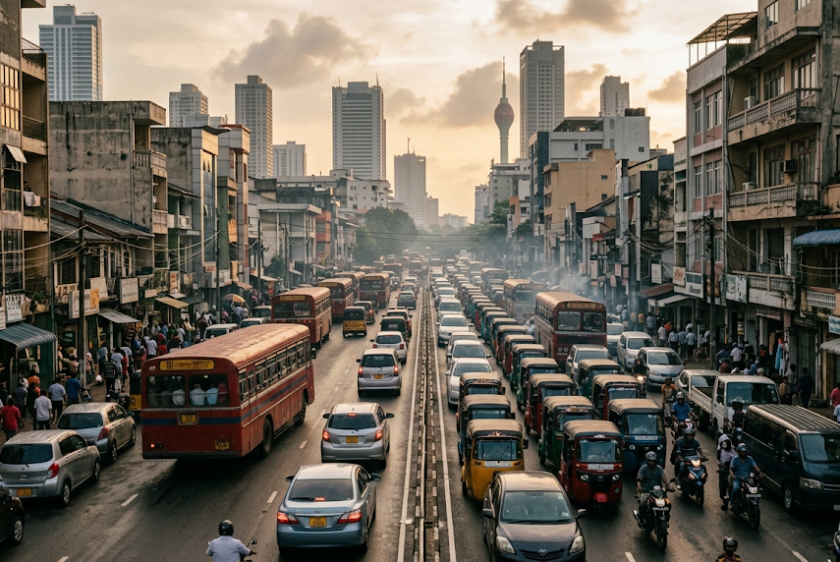
Buying a used vehicle in Sri Lanka is one of the smartest ways to get on the road without a brand-new price tag. But a shiny bonnet and a low odometer reading can hide a lot. Before you hand over your hard-earned money, there’s one check that tells you Sit in a Colombo traffic jam for ten minutes and you’ll feel it the heat, the noise, and the faint sting of exhaust in the air. It’s easy to treat that as just part of city life. But the air quality around us is a shared resource, and every vehicle on the road plays a part in it. Understanding how vehicles shape Sri Lanka’s air and how routine emission testing helps is the first step toward protecting the air we all breathe.
What You’re Actually Breathing in City Traffic
Vehicle exhaust isn’t a single thing. It’s a mix of pollutants, and each one matters:
- Carbon monoxide (CO): an odorless gas from incomplete fuel combustion that reduces the oxygen your blood can carry.
- Hydrocarbons (HC): unburnt fuel that helps form smog and irritates the lungs.
- Nitrogen oxides (NOx): gases that contribute to smog and worsen respiratory conditions.
- Particulate matter (PM): tiny particles, especially from diesel engines, small enough to lodge deep in the lungs.
These are exactly the pollutants an emission test is designed to catch. A vehicle producing high levels of them isn’t just failing a test; it’s adding directly to the air quality problem in Sri Lanka’s cities.
The Scale of the Problem
Vehicles are not a minor contributor to urban air pollution in Sri Lanka; they are the leading one. According to the National Building Research Organisation (NBRO), which monitors the country’s air, vehicle emissions account for roughly 60% of urban air pollution. Some estimates for Colombo place the figure even higher.
The numbers can turn dangerous quickly. In December 2022, Colombo’s air quality index climbed to around 169, well into unhealthy territory, and the government temporarily closed schools in the worst-affected areas. Readings in Jaffna have at times been even higher, far above the level considered safe.
Even on an ordinary day, air quality in Colombo can slip from “moderate” into “unhealthy for sensitive groups” during peak traffic hours, precisely when the roads are busiest and the most people are exposed. Children, older adults, and anyone with asthma feel it first.
Why One Vehicle Matters More Than You Think
It’s tempting to assume a single vehicle makes no difference. But air quality is a story of multiplication.
Sri Lanka has millions of registered vehicles, and a large share of them are concentrated in and around Colombo. Older vehicles are a particular concern; many still on the road are over 15 years old and were never built with modern exhaust-cleaning technology. Two-wheelers add up too: older motorcycles can release significantly more hydrocarbons per kilometer than a typical car.
When thousands of poorly maintained vehicles share the same roads, small individual problems become a citywide haze. The reverse is also true. Every vehicle that’s kept in good condition is one less contributor to the smog, and that’s where each of us has real power.
How Routine Emission Testing Cleans the Air
This is exactly why Sri Lanka introduced its vehicle emission testing program, and the evidence suggests it works.
Environmental assessments have credited the emission testing program, alongside fuel-quality improvements and cleaner vehicles, with helping improve urban air quality over time. The logic is simple but powerful: testing identifies the vehicles burning fuel poorly, prompts owners to fix them, and keeps the worst polluters off the road until they’re repaired.
A single emission test does two things at once. It protects the owner from flagging engine problems early, before they become expensive, and it protects everyone else who shares the same air. That’s the quiet strength of the program: individual responsibility adding up to a national benefit.
A Shared Responsibility
Clean air isn’t something a government or a single company can deliver alone. It’s the result of millions of everyday choices , servicing a vehicle on time, not delaying a test, and taking a failed result seriously instead of finding a way around it.
When you keep your vehicle clean-running, you’re not just following a rule. You’re protecting the air in your child’s school zone, on your morning commute, and in the neighborhood where you live. That’s what makes emission testing more than a formality.
Key Takeaways
Vehicles are the single biggest source of urban air pollution in Sri Lanka, and the air we breathe in our cities reflects the condition of the vehicles on our roads. The good news is that this is a problem we can influence one well-maintained vehicle at a time.
Routine emission testing keeps engines healthy, keeps the worst polluters in check, and helps protect the air every one of us shares. It’s a small act with a national impact.
Let’s protect the air we share together.
📍 Learn more or find your nearest center:
www.ecosri.lk
📞 Hotline: 0117 770 770
LAUGFS Eco Sri — Protecting the Air We Share.